.svg)



Hiring internationally often means choosing between two impossible paths. Spend thousands setting up legal entities in every country. Or face the operational and compliance chaos of managing contractors on your own.
I know. I've lived it. In 2019, I started building a remote-first business travel startup.
When COVID hit, we had to pivot. But those nine months taught me something crucial: hiring internationally was broken. And with remote work about to boom, other companies would discover the same problem.
My teammate in Morocco couldn’t get health insurance because our company was registered elsewhere. Wire transfers took a week to arrive. I was chasing invoices from contractors in different formats, juggling currencies, and trying to stay compliant across borders.
From a business perspective, international hiring should be a no-brainer. You get access to global talent, cost advantages, and the ability to scale without geographic limits. But the time and complexity stop many companies in their tracks.
I was left wondering:
"Shouldn't there be a better way to hire internationally?"
In this article, I'll share the story of how and why we created RemotePass, including the problems we set out to solve:
- Entity setup is prohibitively expensive and slow
- Managing contractors without a system creates tons of manual work
- Payment infrastructure is unreliable, especially in emerging markets
The 3 big problems with international hiring
Each company's situation is unique, but they face the same fundamental problems:
Problem 1. Entity setup is prohibitively expensive and slow
When you want to directly employ people in another country, the "proper" way is to set up a legal entity there. Sounds straightforward until you see what's involved.
The cost to set up an entity varies by country and how many employees you have. But setting up an entity can cost $15K to $50K, with ongoing maintenance in the five figures annually. Add banking, capital injection, tax reporting, payroll, legal, professional services, and manual filings, and quickly you need a local team to handle day-to-day ops and admin.
The timeline is equally brutal. Depending on the country, you're looking at six to twelve months from decision to being able to legally hire someone.
Problem 2. Managing contractors without a system creates tons of manual work
Contractors solve the entity problem. You can hire someone in Brazil tomorrow without any legal setup. They're flexible, cost-effective, and give you immediate access to global talent.
But here's what happens when you scale to dozens of contractors across different countries:
- Your finance team is chasing invoices every single month. Each contractor has their own format. Some forget and need three follow-up emails.
- Then comes payment processing. You're dealing with 12 different currencies. Exchange rates are fluctuating. Your team in Pakistan wants USD but their local bank charges 5% conversion fees.
- HR is drowning in contract variations. Every country has different legal requirements for contractor agreements.
- And everyone's using different time-tracking systems, expense-reporting methods, and communication channels. There's no single source of truth.
We saw companies like Grubtech, where finance teams spent 7 hours per payment cycle just processing contractor payments.
That doesn't scale. And it definitely doesn't let your team focus on strategic work.
Problem 3. Payment infrastructure is unreliable, especially in emerging markets
Paying contractors internationally means dealing with unreliable delivery times, forced currency conversions, and zero control for the people receiving payments.
Transfers take days to arrive. Sometimes over a week. Your contractor has no transparency about when funds will hit their account.
When payments finally arrive, they're converted to local currency whether your contractor wants that or not. Want to hold USD against currency fluctuations? Not an option. Need a different currency? Convert again and lose 3-5% in fees.
This gets even more challenging in emerging markets like Egypt, where banking infrastructure is notoriously complex, or Pakistan, where contractors can't easily hold foreign currency.
For contractors in these regions, payment infrastructure is a barrier to accepting international work. You're locked out of massive talent pools because you can't pay people reliably.
When we set out to build RemotePass, we knew we had to solve all of these problems. We couldn't just make one piece easier. We needed to rethink the entire system.
How we built RemotePass to solve international hiring problems
When my co-founder and I sat down in 2020 to plan RemotePass, we made a strategic decision: start with the hardest markets first.
Most global employment platforms are built in the US or Europe, then retrofitted for other regions.
We did the opposite. If we could solve payment infrastructure in Egypt, compliance in Saudi Arabia, and contractor management in Morocco, then handling Germany or Brazil would be straightforward.
Here’s how we tackled each problem.
Solution 1. Rethinking entity setup and employment models
The traditional model forces a binary choice: set up entities (expensive, slow) or hire contractors (flexible but chaotic without the right systems).
We built infrastructure that gives you options.
For companies that want full-time employees in new markets: Employer of Record (EOR)
Need to hire someone in Brazil but don't have an entity there? With our EOR service, we become the legal employer, handling payroll, benefits, taxes, and compliance. You manage day-to-day work. Get direct employment without $50,000 setup costs or 12-month timelines.
For companies that want to use contractors with zero compliance risk: Contractor of Record (CoR)
We legally hire the contractor and assign them to work for you. Perfect when you're worried about misclassification, or when you're hiring in high-risk markets.
We own the liability. You get one invoice, one payment and zero compliance risk.
For companies that want to use contractors but stay in control: Contractor management
You manage contractors directly and own the relationship. We provide the tools: compliant contracts, automated invoicing, consolidated payments across currencies, compliance tracking.
Solution 2. Automating the operational chaos
We knew that solving entity setup and contractor infrastructure was only half the battle. If finance teams were still spending seven hours per payment cycle on manual work, we hadn't actually solved the problem.
So we built automation into every step of the process.
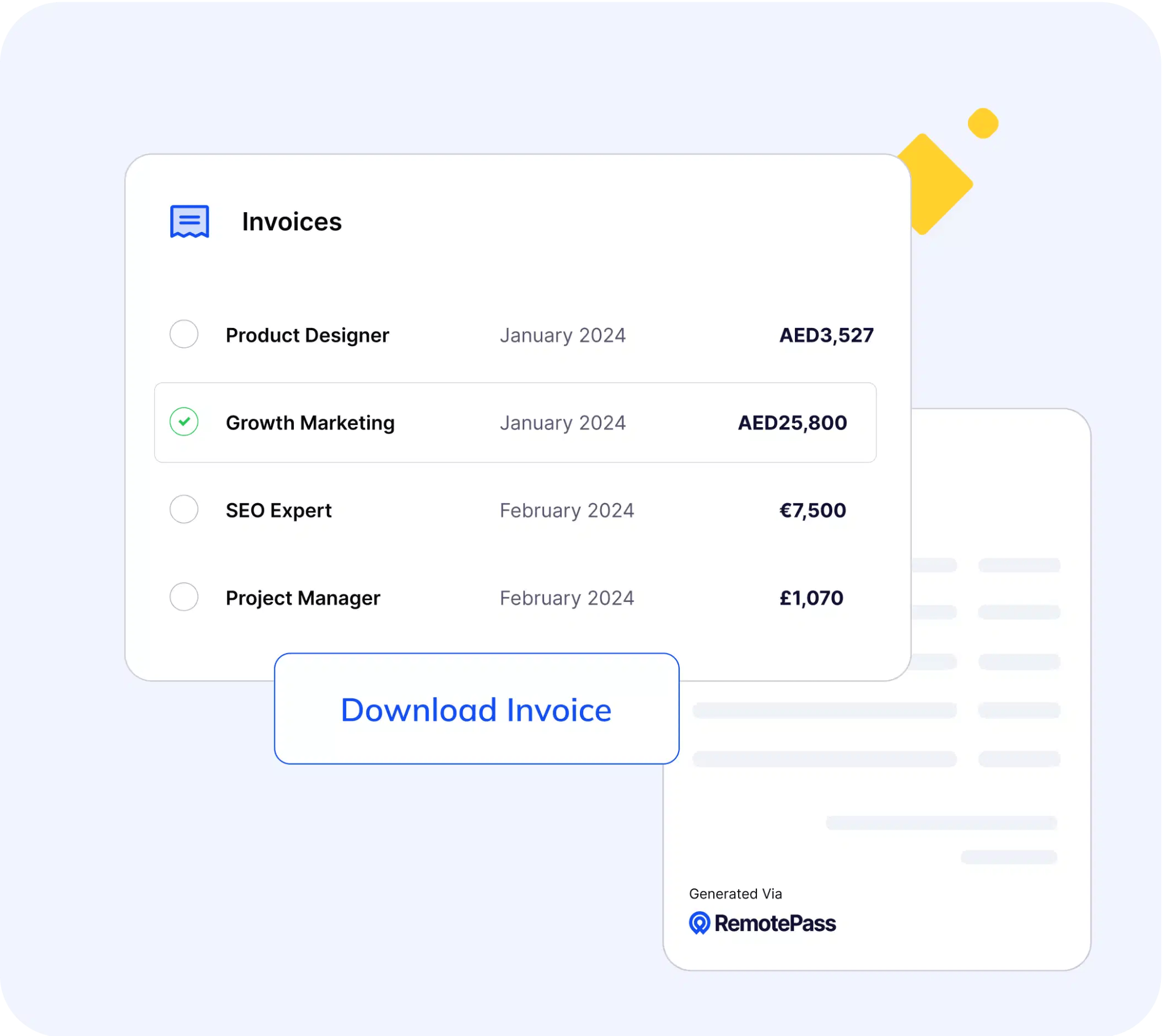
We put invoicing on autopilot
When a contractor completes work, RemotePass automatically generates compliant invoices in the correct format for their country. No more chasing 50 different people.
We built mass payment functionality
Pay your entire global workforce, employees and contractors in a single payment run. The system handles currency conversion, local payment rails, and compliance automatically.
We integrated approval workflows directly into the platform
Contractors submit expenses through RemotePass. Managers approve or decline on the platform or via our Slack integration.
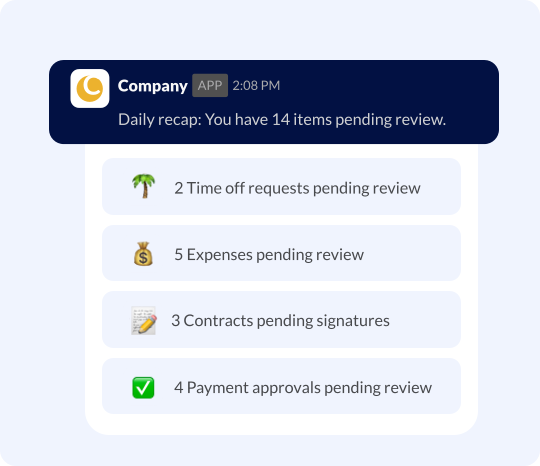
Reimbursements happen automatically in the next payment cycle. Everything syncs with your accounting system.
We built AI-powered reporting
Instead of downloading CSV files and building pivot tables to understand your global workforce costs, you can use Ask AI.
Ask AI answers questions like: "What were our total contractor costs in MENA last quarter?" "Show me time-off trends by department." Get instant answers without the data work.
Solution 3. Building financial infrastructure for emerging markets
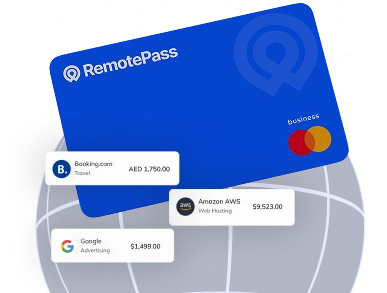
We partnered with Mastercard to launch the RemotePass Card, a physical USD debit card for remote workers in emerging markets.
Most global employment platforms offer virtual cards. But virtual cards are useless in many emerging markets. Online payment infrastructure is limited and most merchants require physical cards. We offer actual plastic cards that work at ATMs, stores, and online.
Workers can receive their payments instantly to their card at zero cost. They can hold funds in USD indefinitely, protecting against local currency fluctuations.
For workers in countries with unstable currencies or banking challenges, this is game-changing. It's the difference between accepting a remote position or turning it down because the financial infrastructure doesn't support them.
We also tackled health insurance. Through our platform, contractors can access comprehensive health insurance plans for themselves and their dependents: something that's nearly impossible to get as an independent contractor in most emerging markets.
This is where the platform becomes more than just operational efficiency for companies. It becomes a competitive advantage for talent retention.
RemotePass today: One platform for global hiring
Today, RemotePass serves thousands of global companies across over 100 countries. Our clients range from startups hiring their first international contractor to companies like Spotify and Logitech managing hundreds of global employees.
RemotePass gives you the infrastructure to hire internationally without the traditional headaches of entity setup, compliance chaos, or payment failures.
We've built a platform that eliminates the tradeoffs:
- You don't have to choose between expensive entity setup and contractor chaos
- You don't have to accept that paying workers in emerging markets will always be unreliable
- You don't have to let your finance team spend hours per payment cycle on manual work
See if RemotePass is a good fit for your team today with a 15-minute demo.


.svg)





.svg)